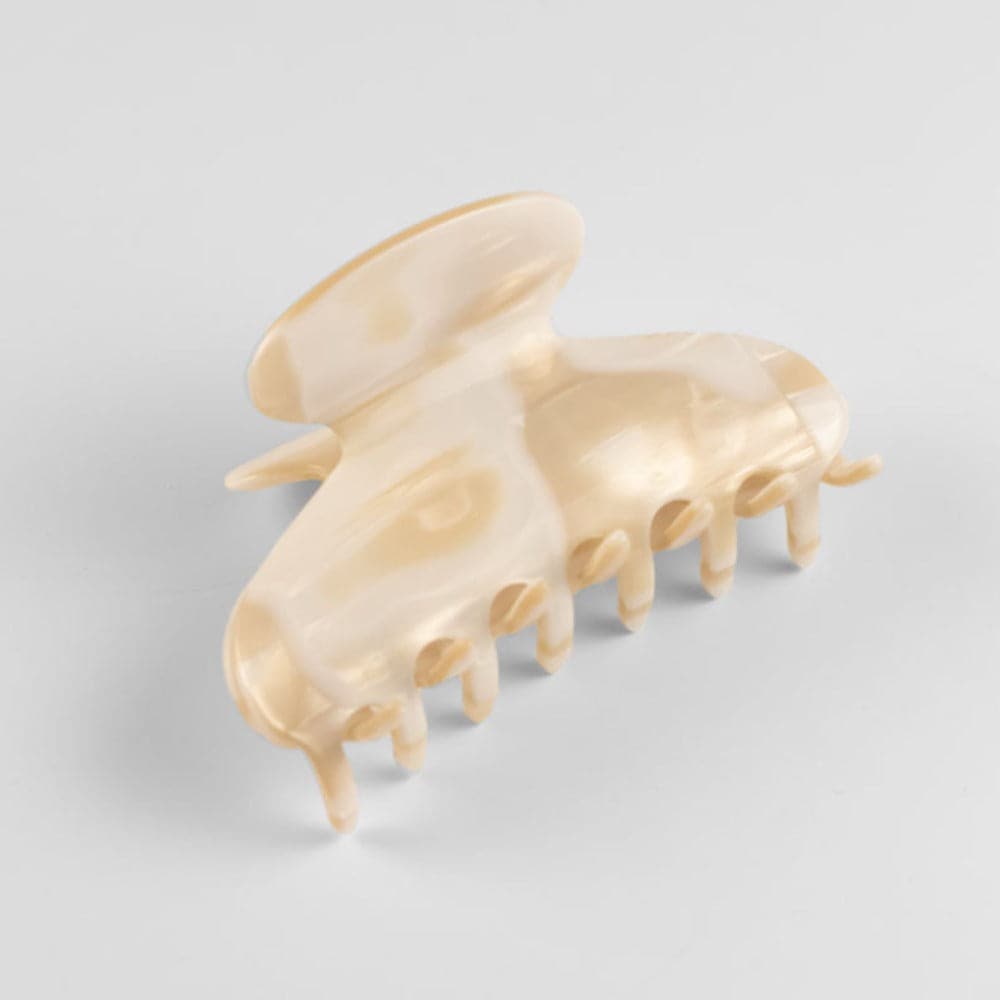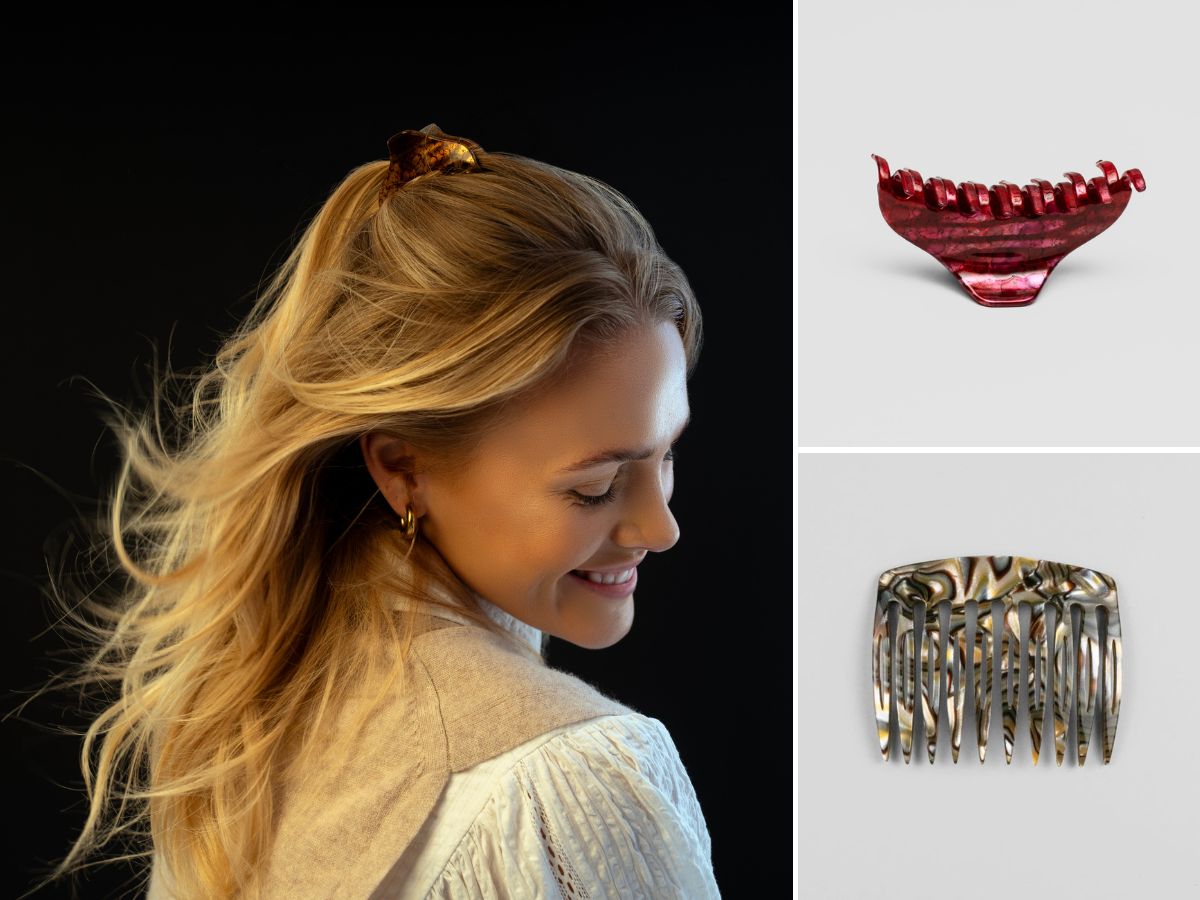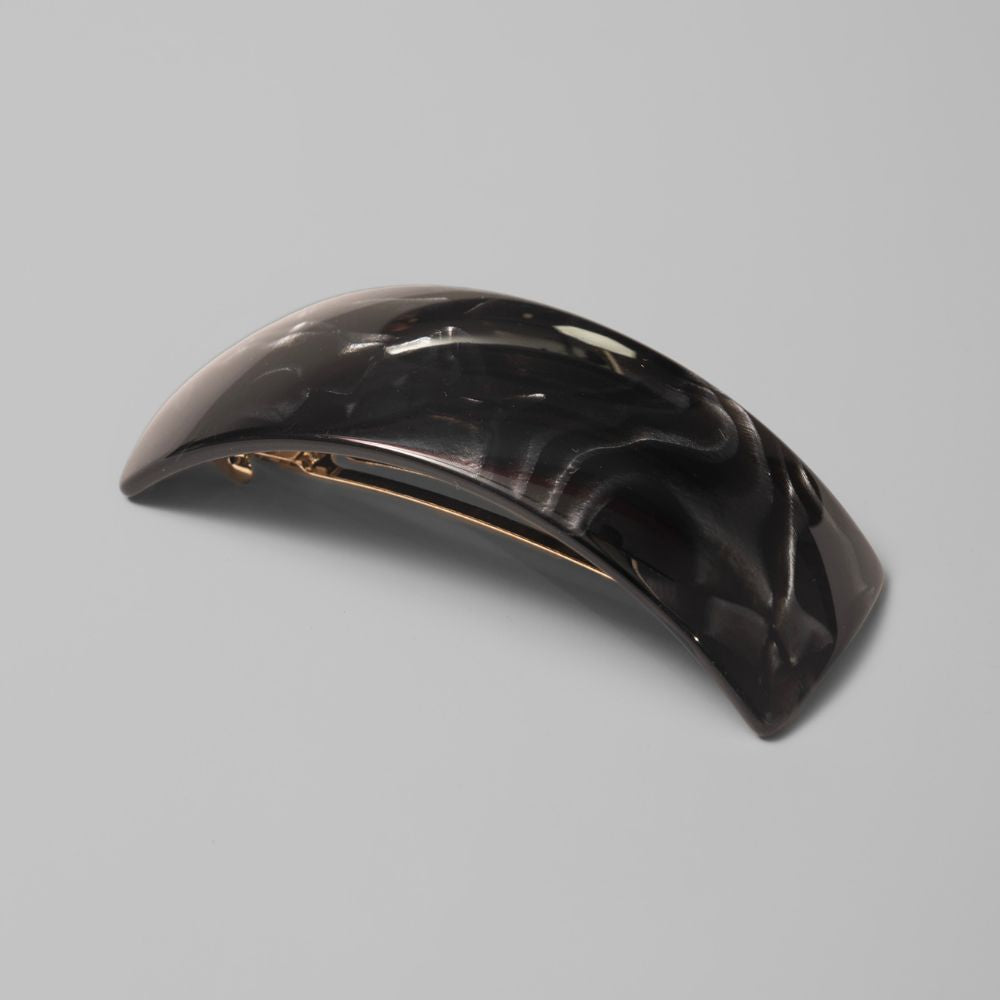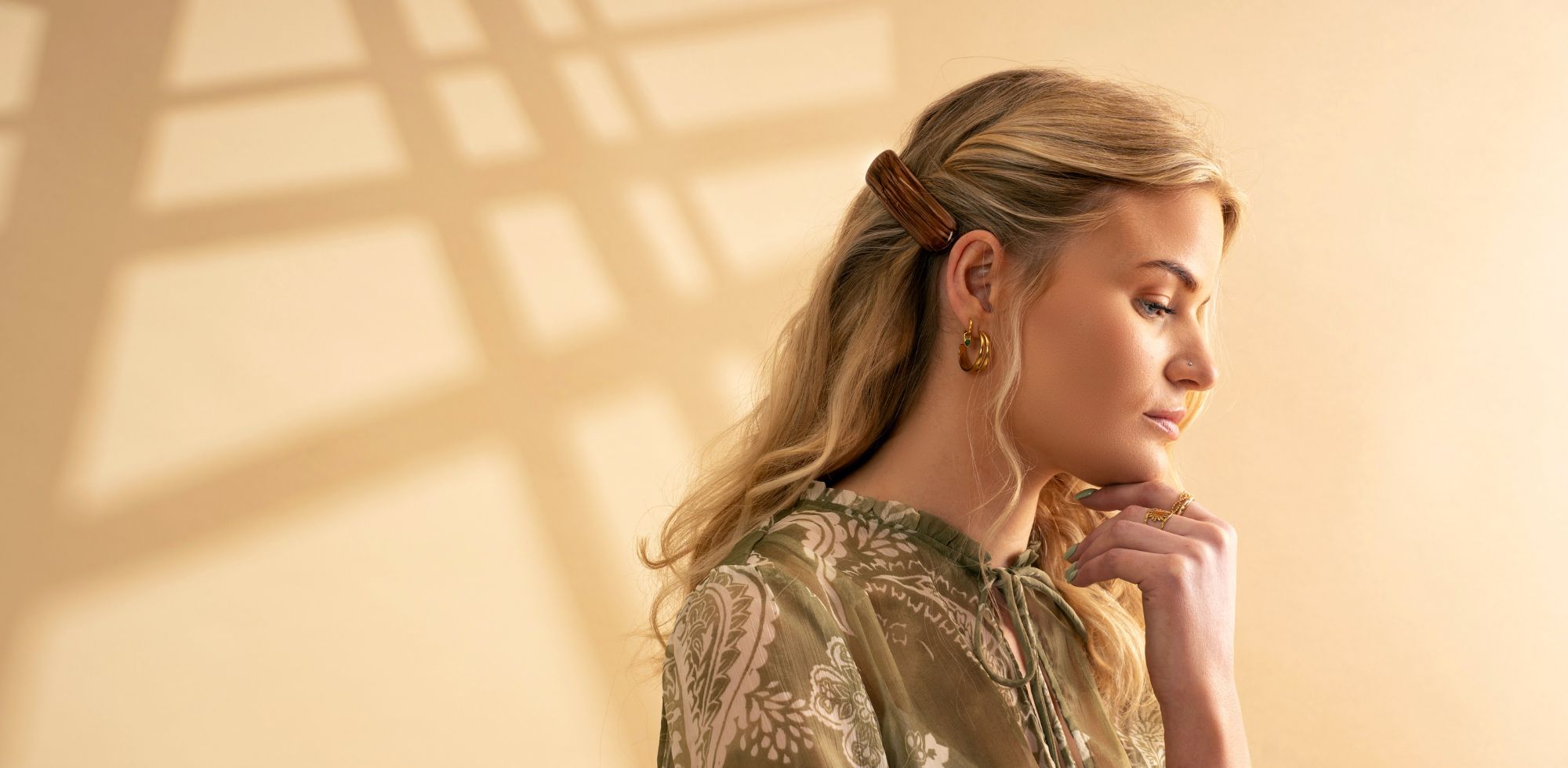


Have you ever wondered how a French handmade hair clip is made? Here is a glimpse behind the scenes at the family-run workshop in France that creates our French Handmade collection.
Step one: We choose the material
Our French Handmade clips are made from a material called cellulose acetate. The workshop uses large sheets of this strong, flexible material, chosen for a beautiful quality finish. At this stage, the materials have not yet been dyed, and we are offered a selection of patterns and colours to choose from. Drawing on everything we learn from talking with our customers every day, we choose the designs we think you will love, and the workshop gets to work.
Step two: Cutting the material
Each French Handmade clip is then cut out using handheld lasers. The factory uses a 3D machine, which allows them to carve deeper into the sheets of resin and carry out any engraving work. The pieces are all still flat at this stage of the process.
Step three: Forming the clips
It is time to shape the clips. Each piece is dropped into 80-degree water to soften the material so it can be shaped. Once softened, it is placed into a mould and then plunged into cold water to set its final shape. This is a time-consuming process, with only one piece made at a time. Using this method, around 80 headbands are made in an hour.
Step four: Polishing the clips
Polishing gives the clips their beautifully smooth feel. The clips are placed into a wooden cask with different polishing materials inside. As the cask turns, these materials, ranging from wood to polypropylene to a soft granite, each give a different finish. Depending on the finish required, clips can go through several rounds of polishing in different casks, taking up to a week to create the perfect smooth finish.
Step five: Acetone soaking
Once the sanding is complete, the hair clips are soaked in acetone. This makes the pieces shine and helps the colour to last.
Step six: Dyeing the materials
Now it is time to give the clips their signature deep colour. The workshop uses Pantone colour references so that we can choose the exact colour we want. Once a colour and design have been agreed, the pieces are coloured using a water-based dye.
Cellulose acetate is a sensitive material that does not always react as expected to dye. If a piece does not match the desired colour, it is bleached white and the dyeing process begins again.
Step seven: Hand polishing
This step ensures each clip is shined to perfection. Using chamois leather, each piece is painstakingly buffed by hand so that no scratches remain.
Step eight: Completion
This stage allows for any further customisation, such as adding initials, or any delicate paintwork that can only be added by hand.
Step nine: Crystal work
The clips are sent to a specialist facility, where our branding is added with a printing machine. This is where our logo is added, along with the reassuring words "handmade in France". At this stage, any crystals are also set by hand, one by one, so that they are secure.
Step ten: Adding the hinge
Finally, the strong steel hinges are fitted and the clips are ready to wear.
Time for shipping
When the clips are ready, each one is packed by hand, one at a time. This allows for a final quality check, making sure that all crystals are present and secure and the paintwork is perfect.
The clips are then sent directly to us, and you can find them in our French Handmade collection.
We hope this has given you a little insight into our French hair accessories, so that when you wear yours, you can enjoy knowing it has been created with a great deal of love and care.
Would you like to know more? Read our blog on why cellulose acetate hair accessories are a better choice than plastic clips.